Compute Is the New Capital Budget: The Hidden Squeeze Behind Every AI Strategy
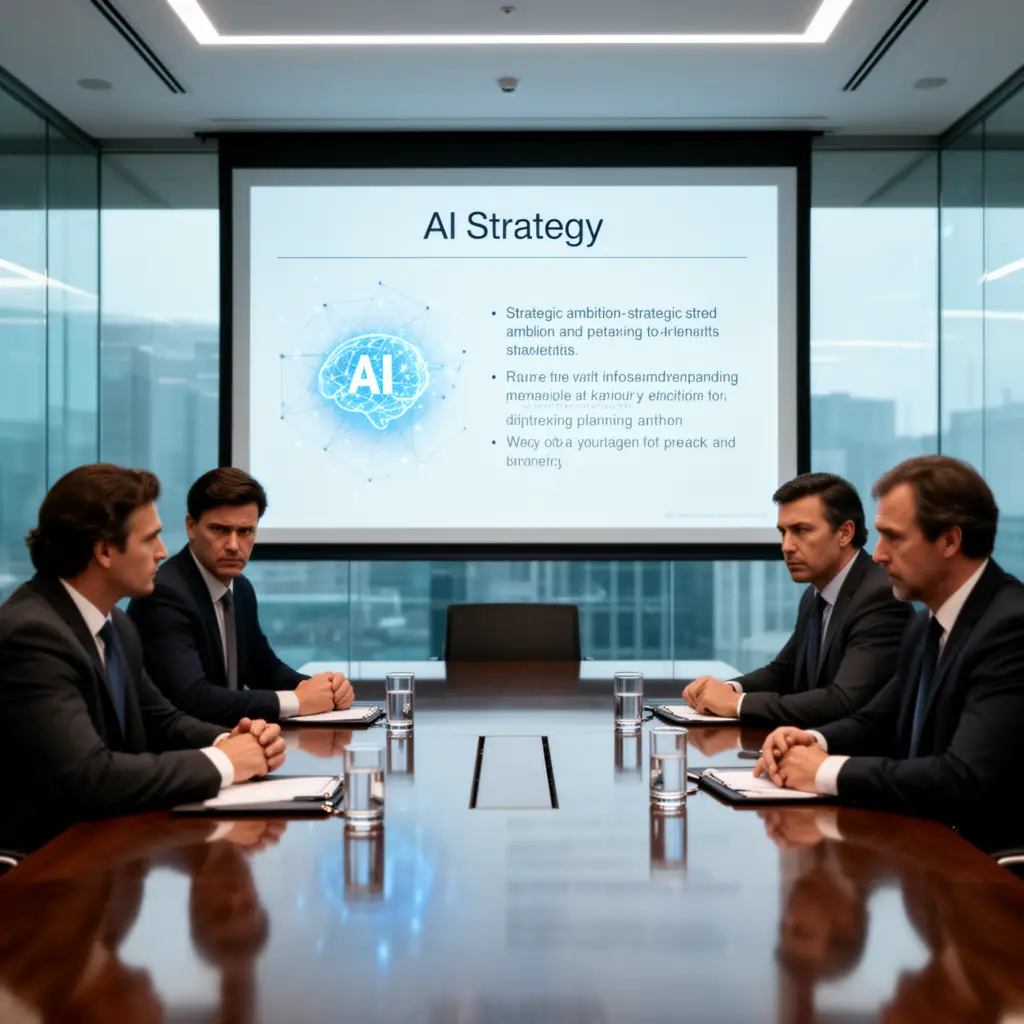
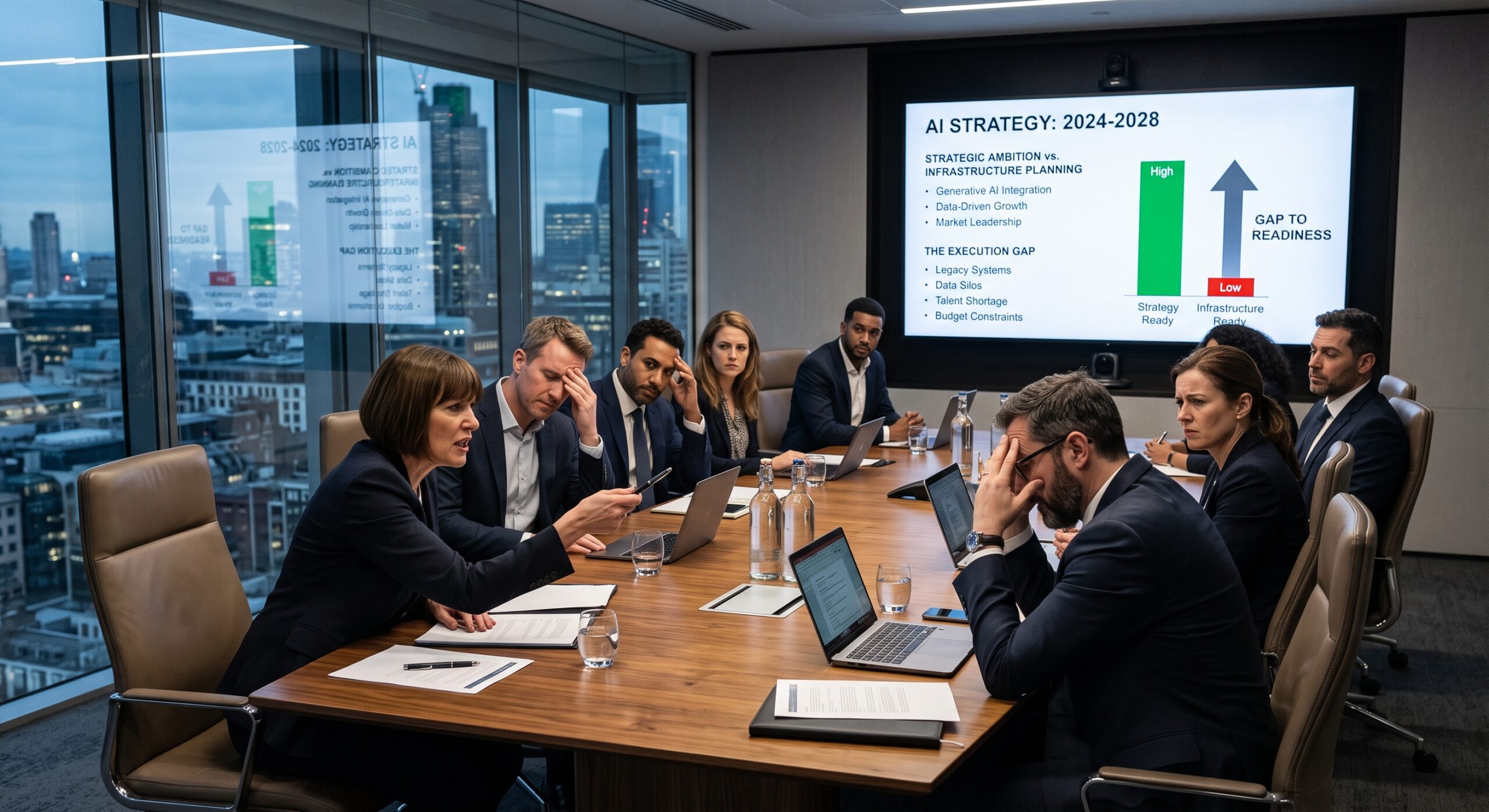
Every board meeting now has an “AI strategy” slide. Almost none have a compute capital strategy slide. That gap is the single biggest risk hiding inside your AI roadmap. Compute is no longer a line item buried in IT ops. It is a capital asset on par with facilities, equipment, and major buys. If your team does not treat it that way, you will lose 12 to 18 months while rivals ship real results.
I see this gap all the time. Teams pour energy into model picks and use cases. Meanwhile, they ignore the physical, financial, and human realities of running AI at scale. As a result, great ideas stall before they ever reach production. So let me walk you through what is really going on below the surface.
The Category Shift: Why Your Compute Capital Strategy Must Change
Traditional enterprise IT runs steady workloads. Email, ERP, web hosting. You plan capacity in calm, even steps. AI workloads are a different animal. They are GPU-heavy, bursty, power-hungry, and thermally brutal.
Consider the numbers. A single NVIDIA DGX H100 system costs roughly $300K to $500K. A real AI cluster can run $10M to $50M or more. Furthermore, Epoch AI research estimates that GPT-4 training alone consumed $78M to $100M in compute. This is not a small bump. It is a full category shift.
Yet many leaders default to a familiar reflex: “Just use the cloud.” That breaks down fast at AI scale. GPU cloud instances run $20 to $40 per hour on major platforms. For sustained training, yearly cloud costs can exceed the purchase price of the same on-prem hardware within six to twelve months.
Of course, on-prem requires power, cooling, space, and staff. The real answer is a hybrid financial model. Most CFOs cannot build that model alone. They need their CTO at the table. This is where the CTO becomes a capital planner, not just a tech advisor. If you want to go deeper on AI strategy beyond the hype, that context matters here too.
The Iceberg Below the GPU Line Item
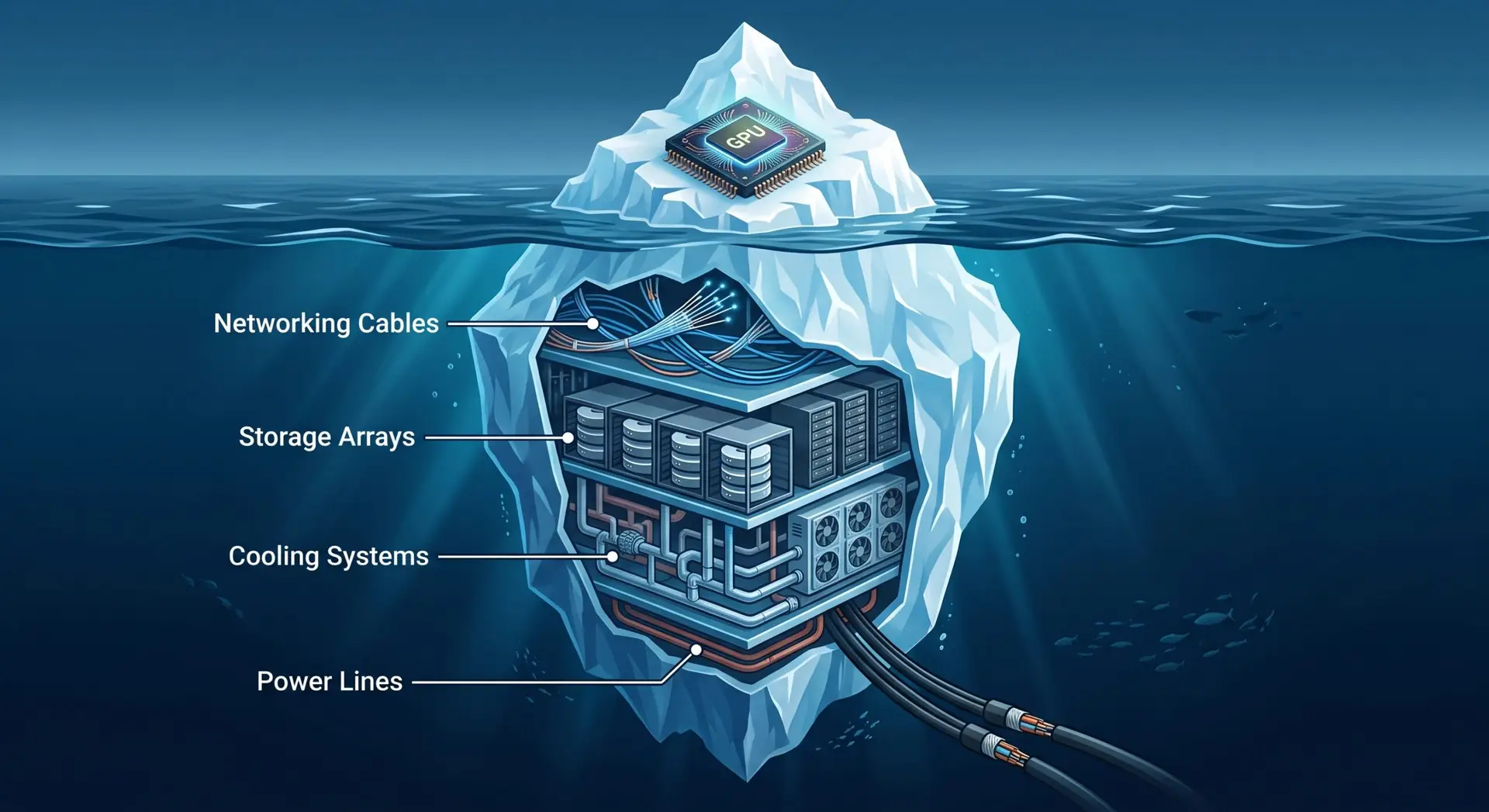
GPUs get all the headlines. However, the total cost of a compute capital strategy involves far more than chips. Think of it as an iceberg. The GPU sits above the waterline. Everything below it can sink your project.
Networking and Interconnect
AI clusters need InfiniBand or high-speed Ethernet fabrics at 400GbE or faster. Networking alone can make up 15% to 25% of total cluster cost. If your fabric cannot keep pace, your costly GPUs sit idle waiting for data. That is money on fire.
Storage and Data Pipelines
Similarly, you need high-speed parallel storage. Capable NVMe or NFS tiers can cost $1M or more. I/O bottlenecks rank among the most common and most missed reasons AI systems lag. Data has gravity. Moving it is slow and costly. For a deeper look at this topic, check out my post on wrangling enterprise data from sprawl to speed.
Power, Cooling, and Facilities
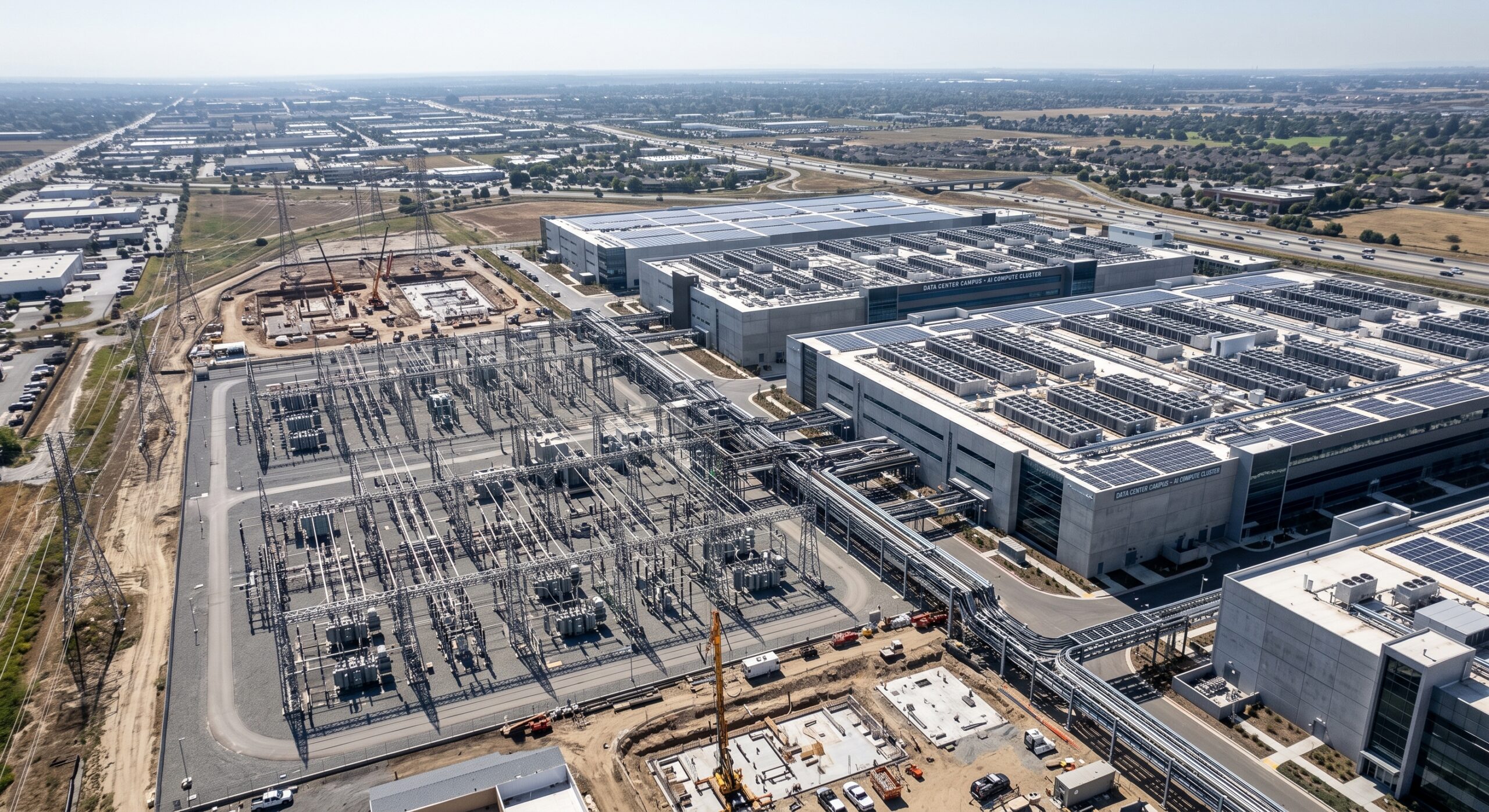
This is the bottleneck nobody talks about enough. A single AI rack can draw 40 to 100 kW. A standard enterprise rack draws 7 to 15 kW, per Uptime Institute data. Most data centers were built for the old number.
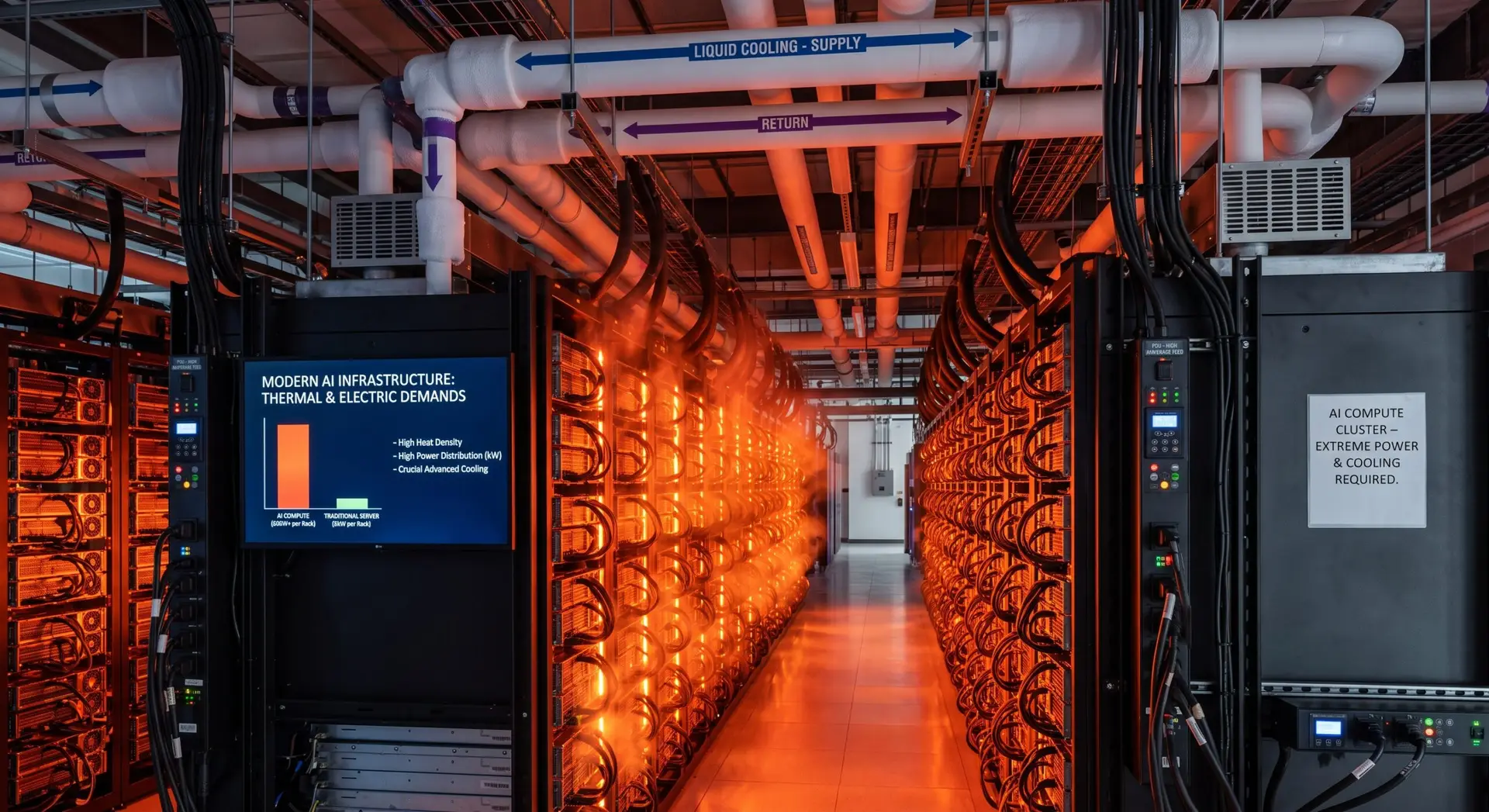
You can buy the GPUs. But if your facility cannot deliver the power or pull the heat, they are costly paperweights. New liquid cooling systems are now required. Retrofitting old facilities is slow and expensive.
Meanwhile, colocation vacancy rates in primary US markets have dropped below 3% for high-density space, per CBRE’s 2024 report. You cannot just “find space” for AI gear anymore. Most importantly, power access is the true gating factor. US data center power use could reach 35 GW by 2030. That is roughly double 2022 levels. Some AI builds now compete with utilities for grid access.
The Financial Model Is Broken
Here is where the compute capital strategy talk gets real. Standard IT hardware depreciates over three to five years. NVIDIA GPU lines turn over every 12 to 18 months. The H100 gave way to the H200, then B100, then B200.
If you apply a five-year schedule to hardware that is outdated in 18 months, your books lie. This calls for new financial models. Think shorter write-down windows, leasing, or internal GPU-as-a-service chargebacks. Your CFO needs you to explain that AI hardware acts more like a consumable than a lasting asset.
Inference: The Sleeping Cost Giant
Most leaders focus on training costs because those make headlines. In reality, inference is the bigger long-term budget threat. Once models reach production, inference runs around the clock, every single day.

For firms deploying AI at scale, a16z analysis suggests inference can account for 60% to 90% of total AI compute spend. Therefore, tuning inference through model shrinking, distillation, and smart serving frameworks is as much a financial task as a technical one.
This is where FinOps meets MLOps. If you are not planning for inference costs now, your production AI system will blow past its budget in the first year. For more on how GPUs compare to purpose-built ASICs for inference, I wrote a full breakdown worth reading.
The Regulated Sector Squeeze on Compute Capital Strategy
For teams serving federal customers, the compute capital strategy problem stacks up fast. I work with teams across federal agencies and defense groups every day. The limits are real and layered.
First, you cannot simply spin up GPU instances on standard AWS. FedRAMP, IL4 through IL6 rules, ITAR limits, and data controls all push you toward GovCloud or on-prem setups. Second, federal buying timelines average 6 to 18 months for FedRAMP alone. That does not match a GPU market where lead times and product lines shift each quarter.
As a result, the compute squeeze hits harder in regulated spaces. However, the teams that solve this problem first build a real, lasting edge. In my experience, winners treat compliance as a forcing function for better planning, not a wall. For more on this angle, see my post on empowering federal agencies with AI agents.
The CTO as Capital Planner
The compute squeeze is changing what it means to be a CTO. You are no longer just picking tools. You are making capital calls that directly shape the P&L, market stance, and risk profile.
This demands new skills. Financial modeling. Vendor talks at scale. Board-level updates on ROI from compute capital strategy choices. Most importantly, the ability to turn technical limits into business language. The CTO who can hold their own with the CFO in a capital meeting is the CTO who will thrive.
In practice, this means partnering with your CFO on compute decisions. Build shared terms. Create joint planning steps. Frame every ask in terms of ROI, risk, and time to value. If your CFO does not grasp why GPU buying is a capital strategy choice, that is your gap in messaging, not their gap in thinking. Tough calls like these are exactly what I explore in my guide on executive decision making under pressure.
What to Do Monday Morning: A Practical Playbook
Audit Your Actual Compute Position
Start with what you have. Map current GPU capacity, usage rates, and power and cooling headroom. Most teams lack a clear picture of their starting point. You cannot plan a journey without knowing where you stand.
Build a Three-Year Compute Capital Model
Model hybrid cloud and on-prem paths with range analysis. Include the full iceberg: networking, storage, power, cooling, and compliance costs. Make it a living document, not a one-time slide. Update it each quarter as GPU pricing and your workload mix change.
Align with Your CFO Now
Do not wait until the board asks. Bring your CFO a cost comparison of cloud versus on-prem for your specific AI workloads. Show them the write-down gap. Walk them through the inference cost curve. Give them the tools to champion compute capital strategy alongside you.
Budget for the Unsexy Stuff
Plan for networking, storage, power, cooling, and compliance from day one. These items make up the bulk of your total AI cost. Skipping them is the fastest way to build a pricey, slow system.
The Bottom Line on Compute Capital Strategy
The teams that treat compute as a strategic capital choice will outrun those that treat it as an IT buying task. This is not a tech problem. It is a leadership and capital planning problem that happens to involve tech.
Gartner research shows that enterprise AI projects with weak infrastructure planning fail or stall at two to three times the rate of those with a clear compute capital strategy. The math is clear. The question is whether your team will act on it.
For every CTO reading this: your moment is now. Step into the capital planning room. Bring the data. Speak the language of business risk and return. The compute squeeze will not ease up. The leaders who plan for it will win. The rest will wonder why their AI strategy never left the whiteboard.