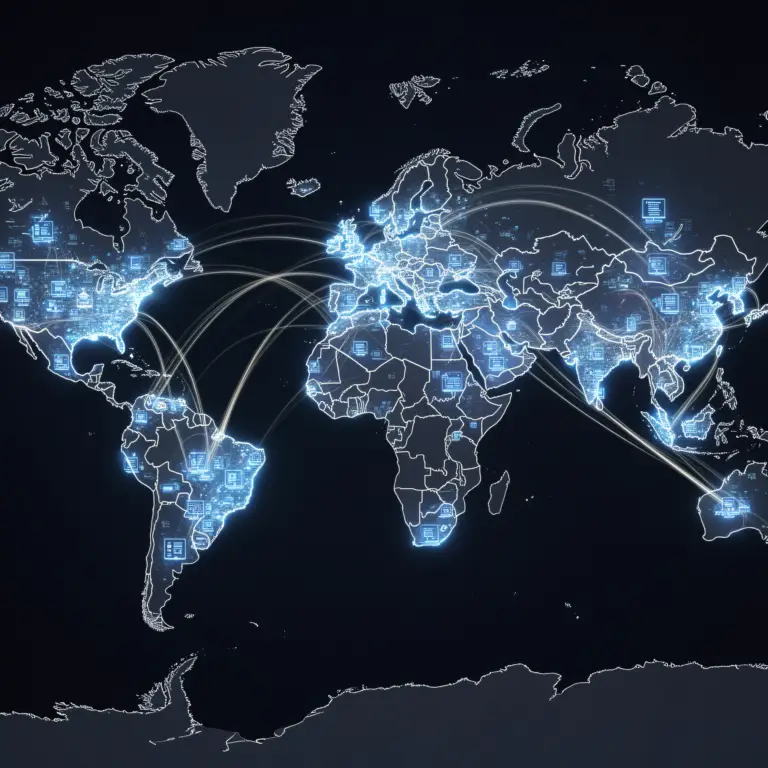
The idea that AI runs on one global cloud is falling apart. Sovereign AI is here, and it is changing how companies build, deploy, and scale their most critical tech. Over 60 countries now have national AI plans. Many of them demand that AI models train and run on domestic soil. If your company works across borders, this lands on your roadmap whether you planned for it or not.
I spend most of my days helping federal and commercial customers navigate complex, locked-down IT setups. So when I see the rest of the world moving toward rules we have worked under for years, I pay close attention. This is not a future trend. It is the current reality. Most CEOs are not ready for it.
What Sovereign AI Actually Means
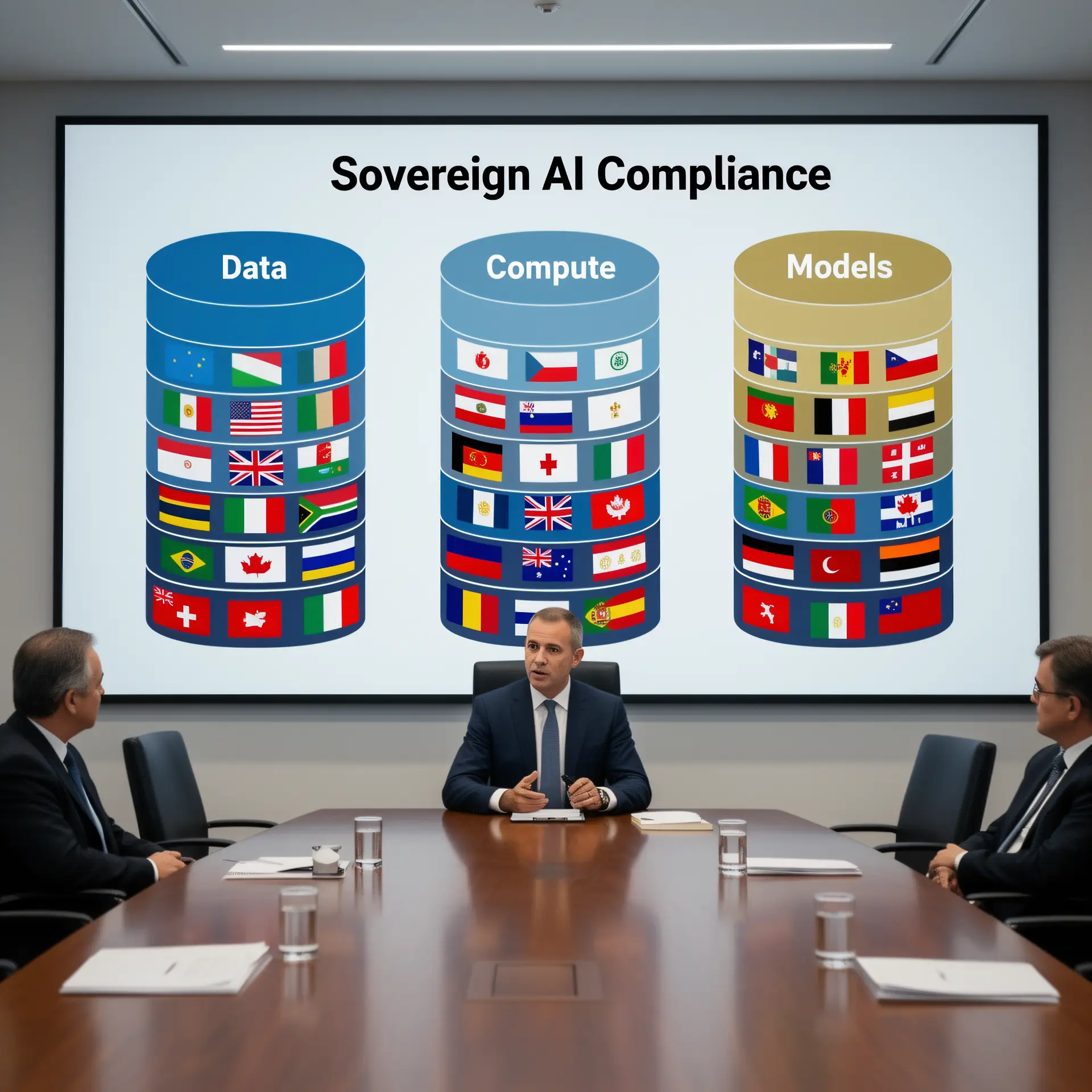
Sovereign AI means a nation wants control over three things: its data, its compute, and its AI models. In short, countries want AI that serves their people to live on their turf, under their rules.
Data Sovereignty
You likely know this one already. GDPR in Europe, PIPL in China, and similar laws around the world force companies to store citizen data locally. Most countries with AI plans include data storage rules. If you have not mapped your enterprise data sprawl, this is where the pain starts.
Compute Sovereignty
This layer is newer and far more disruptive. Nations now want AI workloads to run on local hardware. US export controls block NVIDIA A100 and H100 GPU sales to China, Russia, Iran, and parts of the Middle East. Countries that cannot buy top chips are building their own. Huawei’s Ascend line is a direct response to these controls.
Model Sovereignty
Governments now ask: who owns the model weights? Can we inspect them? Can we run them without calling an API in another country? This is why open-source models like Llama, Mistral, and the UAE’s Falcon 180B are gaining traction. Closed-model API calls create vendor lock-in at a national level. That is a risk most governments refuse to accept.
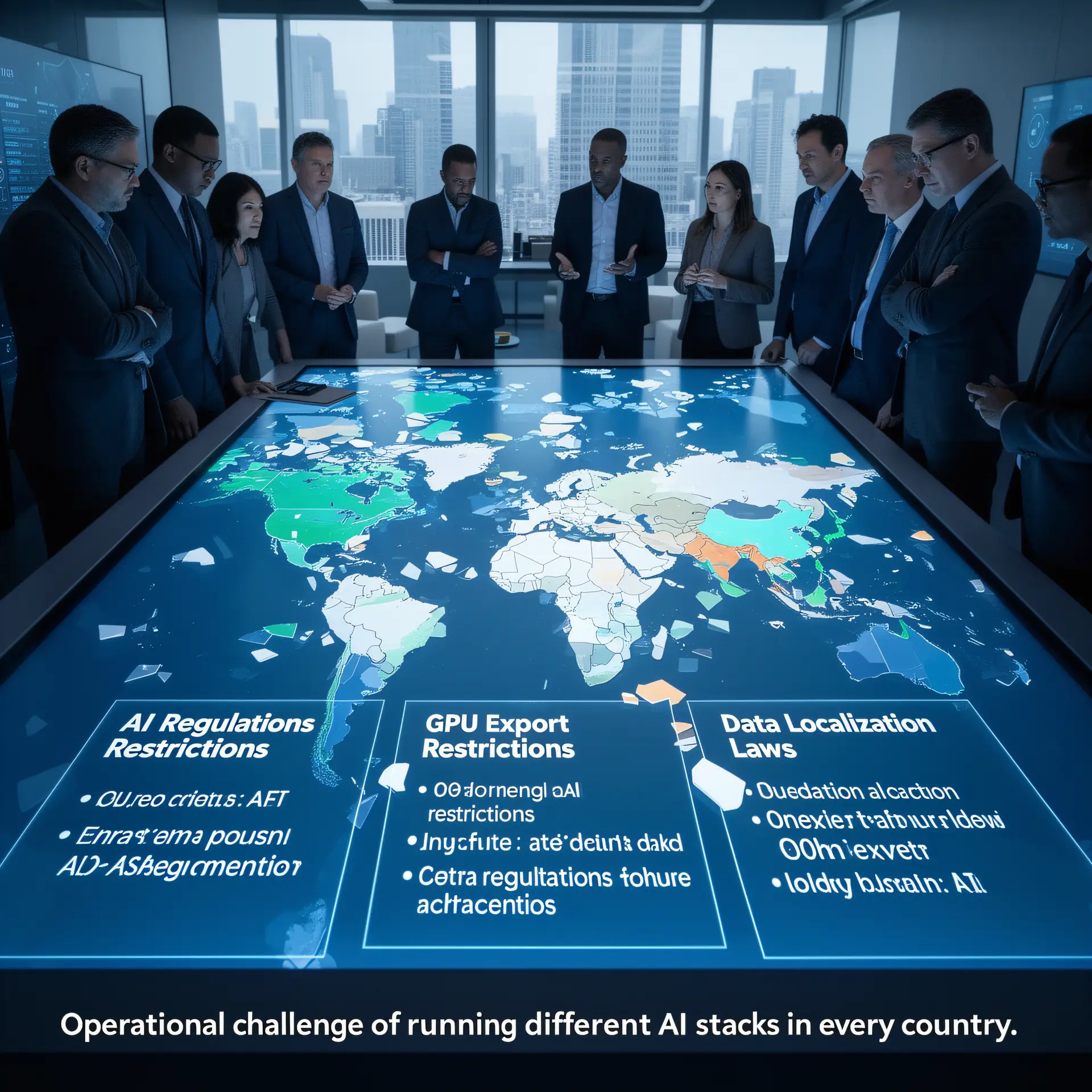
These three layers stack on top of each other. Together, they create a world where your AI setup might need to look totally different in every country you touch.
Follow the Money: Sovereign AI Investment Is Massive
If you want to know where the market is going, follow the capital. The hyperscalers are spending billions to build sovereign cloud setups.

Microsoft has put over $10 billion into sovereign cloud regions. Google launched Sovereign Controls for its cloud platform. AWS expanded GovCloud and is building sovereign regions across Europe. Oracle opened sovereign clouds in the EU and is pushing into the Middle East.
France committed $2.5 billion to its national AI program. The UAE built Falcon 180B on sovereign hardware. Saudi Arabia’s SDAIA is pouring money into local AI skills. These are not pilot programs. They are national plans backed by real budgets.
Analysts project that global spending on sovereign cloud will top $260 billion by 2027. When your cloud providers rebuild their entire global footprint around sovereignty, you need to pay attention. This is the new shape of global cloud computing. I covered the broader version of this in AI strategy beyond the hype.
The Federal Playbook: Defense Work Is a Strategic Edge for Sovereign AI
Here is something most commercial leaders miss. The US Federal Government has done sovereign computing for decades. They just never used that label.
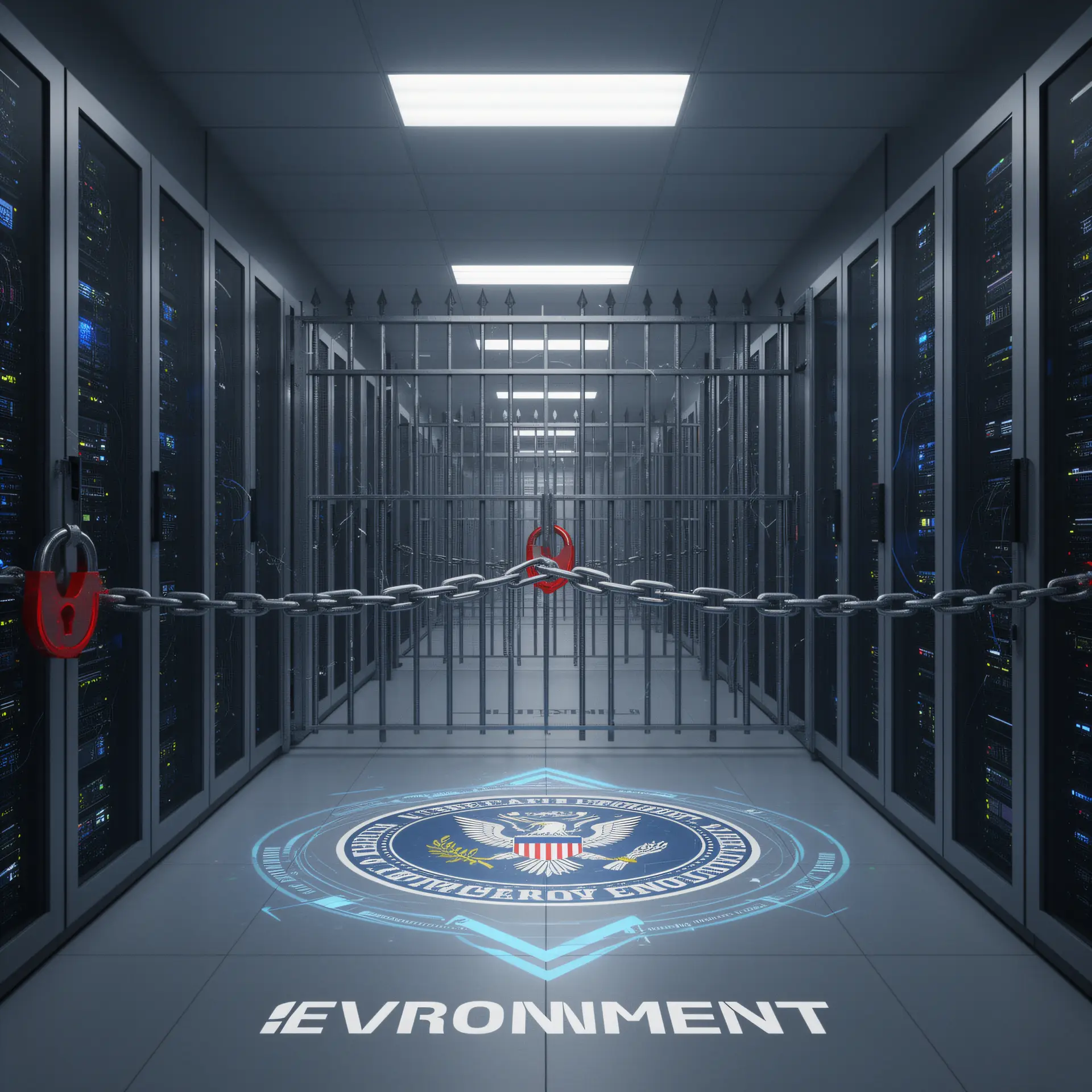
Think about it. FedRAMP. Impact Level 4, 5, and 6 enclaves. ITAR rules. Air-gapped networks. Strict data handling. Full audit trails. These are all early sovereign AI frameworks in practice. They force you to keep data in set places, run compute in certified spots, and prove every step of your compliance.
At our company, we work in these locked-down setups every day. We help customers build and run systems where you cannot just spin up a public cloud instance and call it done. You need to know exactly where data lives. You must track who can access it. And you need to show how compute is certified.
Companies that serve federal and defense customers have a massive head start. The skills you build in FedRAMP High or IL5 setups translate directly to sovereign AI work abroad. If you already know how to build for constraint, you are better placed than most rivals. FedRAMP authorized services have grown past 300, which shows how much demand exists for compliant cloud. Organizations looking to empower federal teams with AI agents already operate in this world.
Multi-Sovereign Architecture: The Real Challenge
What a Sovereign AI Stack Looks Like
This is not multi-cloud in the way most people use that term. Using AWS in one region and Azure in another is simple by comparison. Sovereign AI means separate data stores, separate compute setups, possibly separate models, and certainly separate governance. Per country. Per jurisdiction.
For example, your AI work in Germany must comply with the EU AI Act. Your work in India must process citizen data on domestic servers. Your work in the UAE might use the Falcon model on local hardware. Each stack looks different. Each one has its own rules.
Why Lift and Shift Will Not Work
You cannot just copy your central AI stack to a new region. Sovereign rules often require specific security certifications and local data pipelines. They also demand jurisdiction-level model governance. On top of that, some countries require model openness that closed-source vendors cannot provide. You may need to fine-tune open-weight models locally instead of calling an API back to the US.
The Cost Reality Check
Let me be direct about costs. Running separate sovereign AI stacks across many nations can multiply your AI program costs by 3x to 10x. You face separate training runs, separate data pipelines, and separate compliance audits. Add separate security certifications on top. Most boardroom AI budgets do not plan for this.
The “AI will pay for itself” story falls apart fast when you add sovereignty into the math. This is where strong decision-making under pressure becomes critical. You need to size the real cost before the board asks why the budget tripled.
The Talent Problem
If your AI stacks must be local, your teams need local skills. A sovereign AI setup in Saudi Arabia requires people who grasp local data protection law. They need to speak Arabic and know the cultural context. You cannot solve this by sending a cloud engineer from Virginia. This is a workforce planning problem that most CTOs have not scoped yet.
Sovereign AI Is Market Access, Not Just Compliance
Here is the reframe that matters most for CEOs. Sovereign AI readiness is not a cost center. It is a market access tool. If your rival cannot deploy AI in a sovereign-compliant way in a given country, they cannot bid on the contract. You do not just win. They cannot even play.
This is exactly how FedRAMP works in US government contracting. If you lack the authorization, you are locked out. The same pattern is forming worldwide. First movers who build sovereign-ready setups now will capture markets that others simply cannot enter.
Sovereign AI capability becomes a moat. It is hard to build, slow to earn, and once you have it, your rivals face years of catch-up.
What I Would Tell a CEO Walking Into This Blind
If you lead a company with any global AI goals, you need three talks this quarter.
First, ask your CTO one question: If a major customer required us to run our AI on their sovereign setup tomorrow, could we do it? If the answer is no, or even “maybe,” you have a gap that needs urgent action.
Second, map your exposure. Where do you operate or plan to expand? What are the data, compute, and model sovereignty rules in each region? Most companies have not done this mapping. Start now.
Third, decide: build, partner, or wait. Building sovereign AI skills in-house makes sense when it is core to your market position. Partnering with sovereign cloud providers works when speed matters more than control. Waiting is often the riskiest choice. While you wait, rivals are getting certified and locking up contracts.
The Bottom Line on Sovereign AI
Sovereign AI is not a regulatory hassle. It is the new shape of global tech. The companies that treat it as a strategic skill, not a compliance burden, will own the next decade of global AI. The ones that ignore it will wonder why they keep losing bids they thought they should win.
The world is splitting its AI stack. The only question is whether you are ready for it.