The Monday Morning That Changed How I Lead
It was 7:14 AM on a Monday, and four problems were waiting for me before my first cup of coffee. A critical security flaw had surfaced overnight on a federal system. My best network engineer had just quit. A compliance audit timeline moved up by three weeks. And a key customer escalated a delivery issue to my boss. That morning taught me what crisis stacking leadership really means.
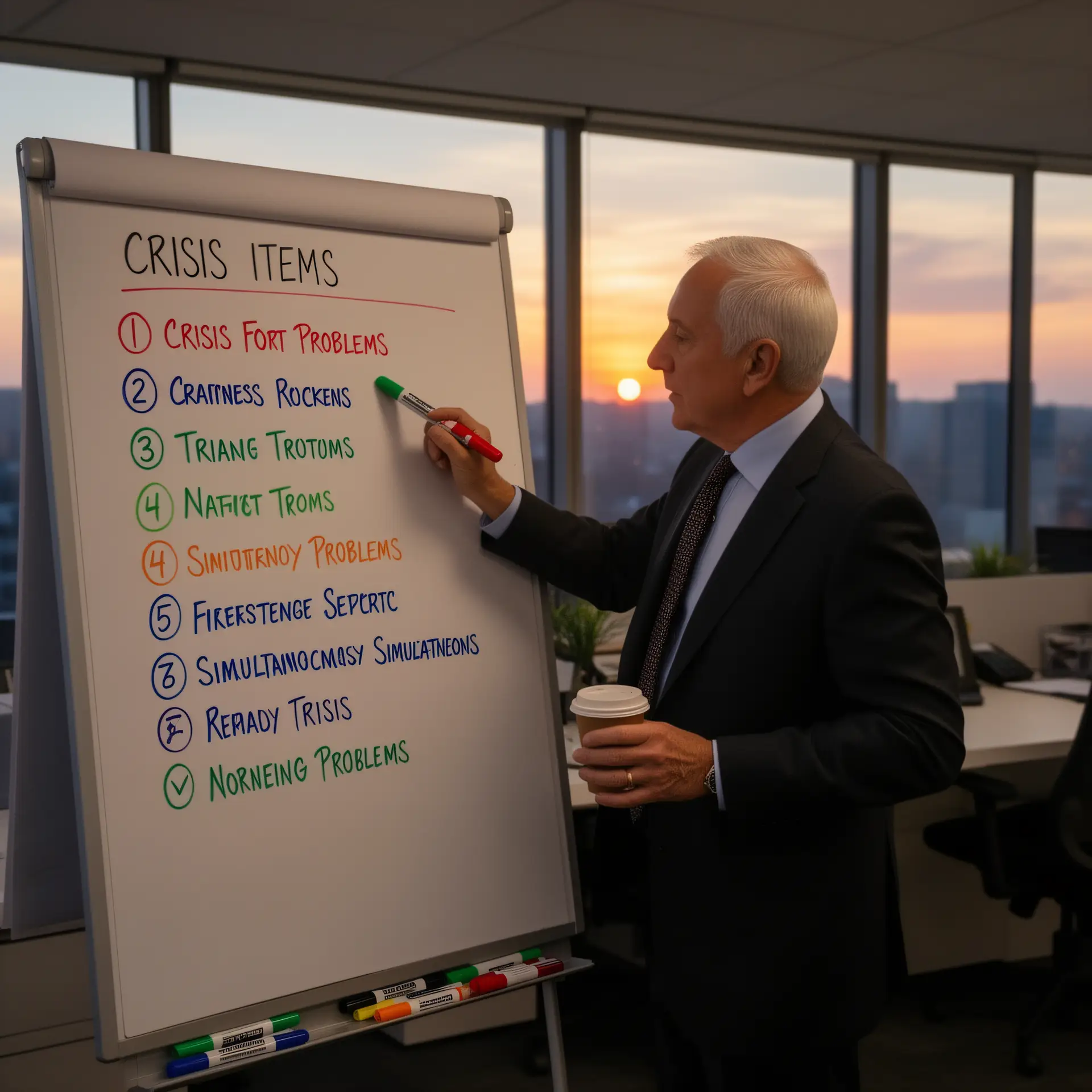
Any one of those problems would have eaten a full day. Together, they fed off each other. The engineer leaving made the security fix harder. The audit shift made the customer issue more urgent. Everything was tangled.
My old playbook was broken. I needed a system, not a hero moment. What I built over the following months is what I call the Monday Morning Operating System, a repeatable framework for leading when crises pile up. It works.
Why Crisis Stacking Leadership Is the New Baseline
The Data on Compound Disruption
This isn’t just my experience. PwC’s 2023 Global Crisis and Resilience Survey found that 96% of organizations faced disruption in the prior two years, and 76% said their most serious disruption had a medium to high impact. Disruption isn’t the exception anymore. It’s the operating environment.
The problem is that most of us still run single-threat playbooks in a multi-threat world. When crises overlap, those playbooks stop working.
Why Single-Threaded Playbooks Fail
Most crisis frameworks assume one problem at a time. NIST incident response, FEMA’s Incident Command System, your business continuity plan. They all follow the same pattern: detect, respond, recover, move on.
Crises don’t wait in line. They pile up, and when they do, leaders default to whack-a-mole. You jump from fire to fire and react instead of lead. You protect nothing well because you’re trying to protect everything. As I wrote in executive decision making under pressure, reactive mode is where good leaders make their worst calls.
You don’t need a better reaction. You need a system that runs every Monday, whether you have zero fires or four.
The Monday Morning Operating System
Step 1: Name and Triage the Active Stack
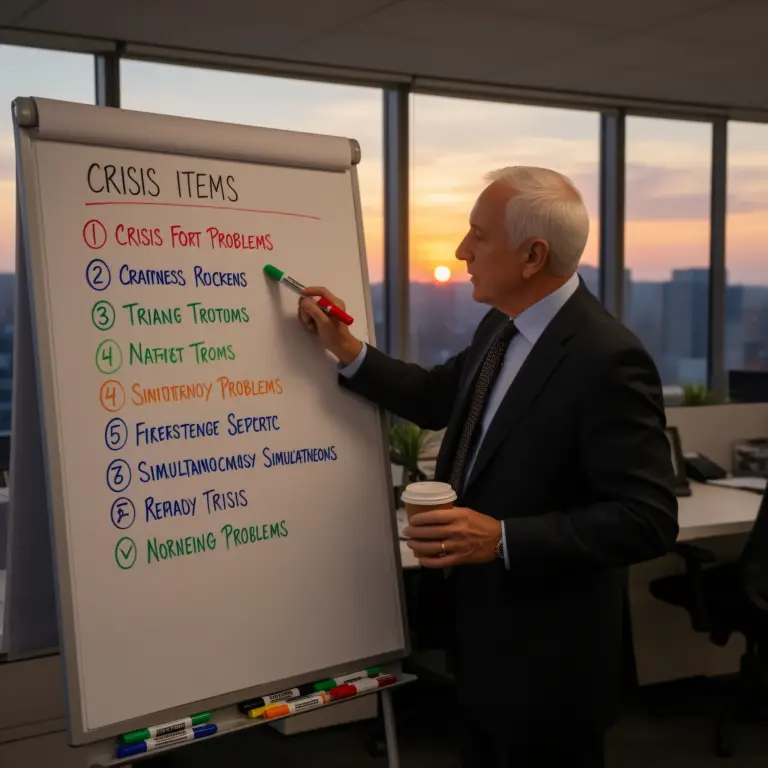
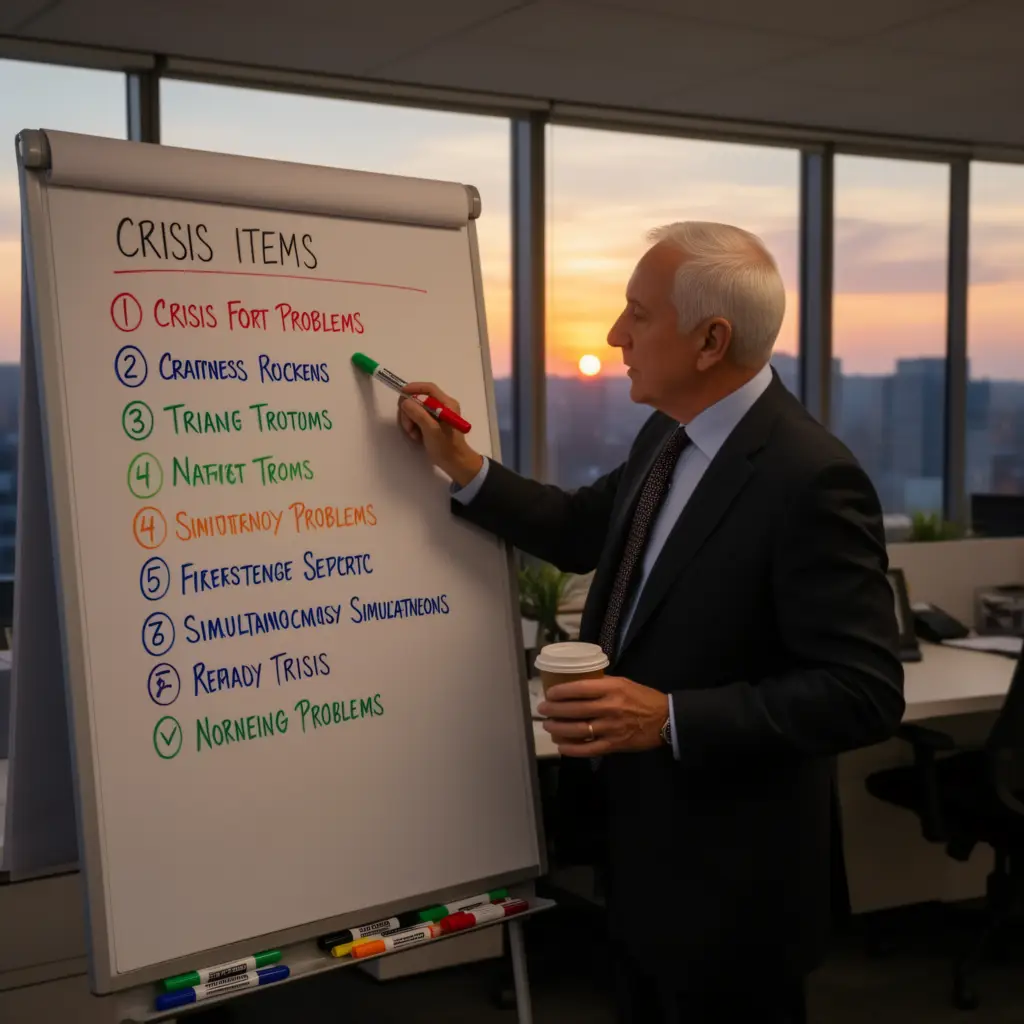
Name every active crisis out loud. Write them on a whiteboard or put them in a shared doc. Make them visible. Unnamed problems are unmanaged problems.
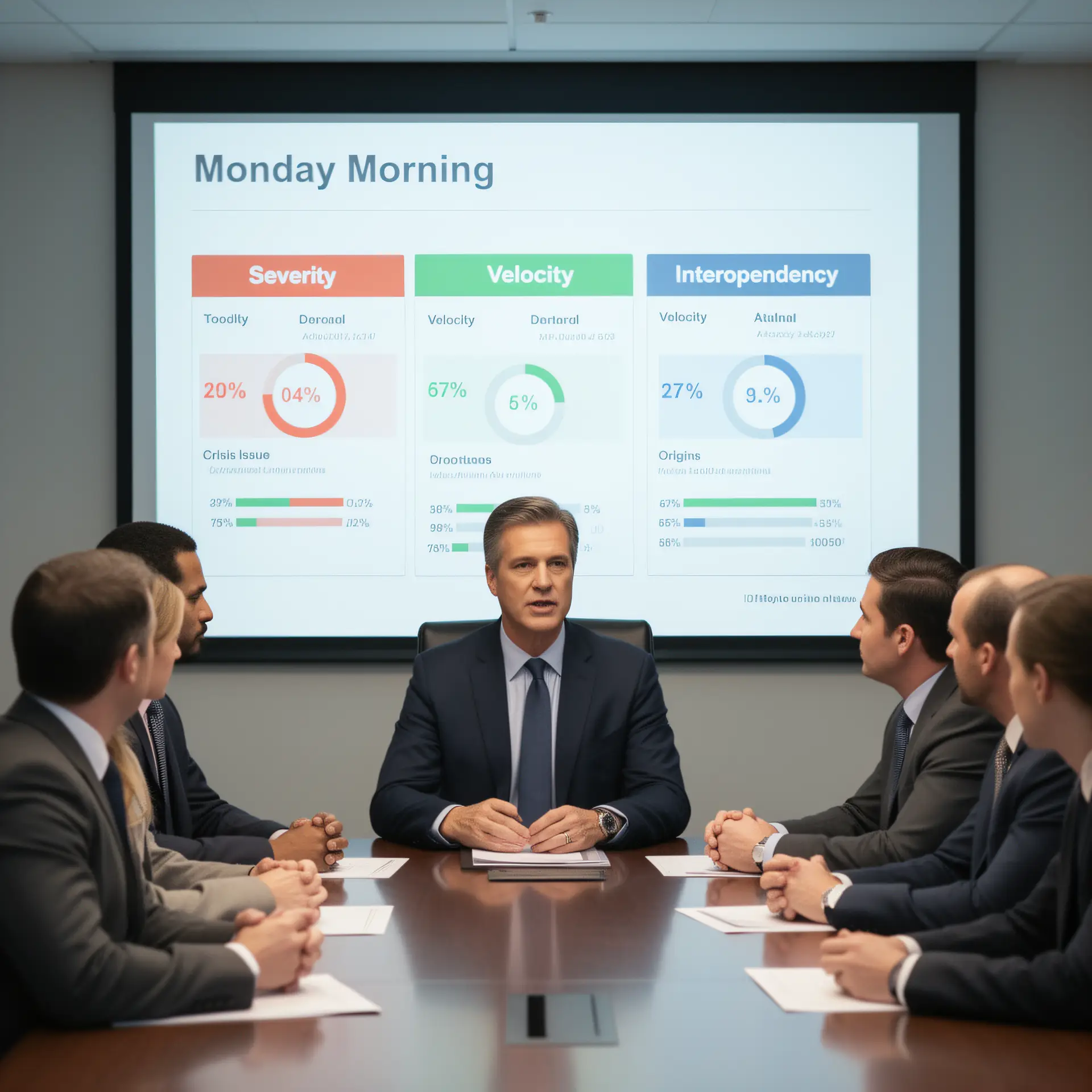
Then triage each one on three dimensions:
- Severity. How bad is the impact on mission, revenue, or safety?
- Velocity. How fast is it moving? Do you have hours, days, or weeks?
- Interdependency. Does this crisis make another one worse?
Interdependency is the one leaders miss most. Losing a key engineer during a security incident isn’t two separate problems. It’s a compounding failure loop, because the talent loss slows the security fix. You have to see those connections early.
Step 2: Find the Irreducible Core
In a crisis stack, you can’t protect everything, and trying to guarantees you protect nothing well. Pick your irreducible core: the two or three things that, if they fail, cause damage you can’t recover from.
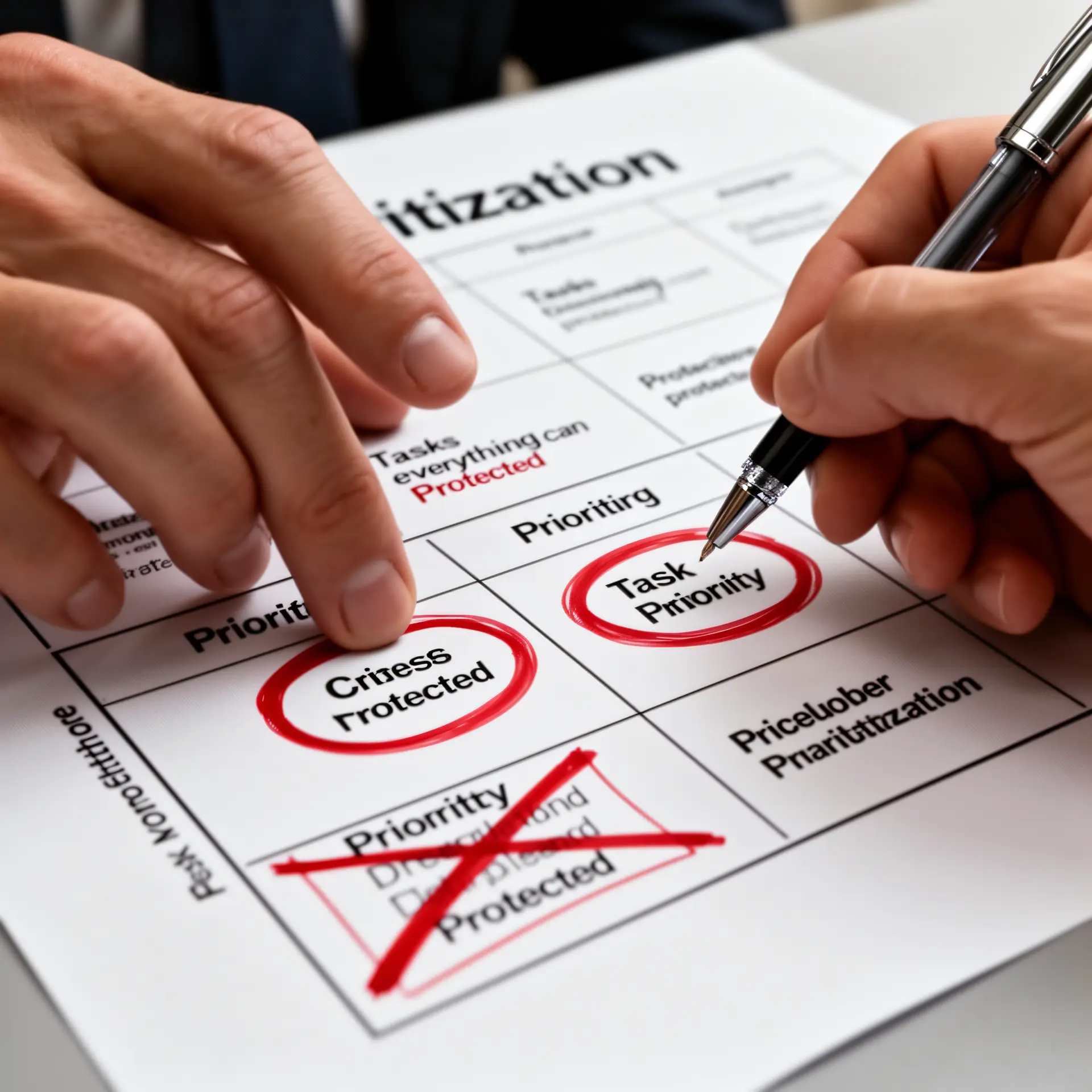
In federal IT, my core is usually contract delivery timelines, security posture, and team safety. Everything else can flex. Everything else can be “good enough” for now. That’s a hard sentence to write as a leader, and even harder to live. It’s also the whole game.
Step 3: Map Decision Authority for the Week
During compound crises, decision paralysis usually has one source. Nobody knows who can make the call, so everything flows up to you and you become the bottleneck.
I set a decision authority map every Monday. It isn’t the org chart. It’s specific to this week’s stack. “You own the vendor issue up to $100K. Above that, bring it to me.” “You own incident response unless it involves PII for more than 5,000 records.” Your people get clear lanes, and you stop drowning in decisions others can make well.
Step 4: Allocate Leadership Bandwidth, Not Just Resources
Most leaders allocate budget, tools, and people, then forget the scarcest resource of all: executive attention. You have a limited capacity for complex decisions each day, and stress shrinks it. Research summarized in Nature Reviews Neuroscience shows that even short bursts of uncontrollable stress impair the prefrontal cortex, the part of the brain you rely on for judgment and planning.
So on Monday morning I decide where my own focus goes. Not my team’s time. My mental energy. I pick two crises that need my direct input and delegate the rest with clear authority.
That isn’t lazy leadership. It’s math. You have a finite number of good decisions in you each day, so treat your attention like the scarce asset it is.
Step 5: Set the Communication Cadence
Teams under sustained multi-crisis pressure get anxious. Rumors spread. People guess at priorities and guess wrong. During a crisis stack, communication is a stabilization tool, not a nice-to-have.
I set a predictable rhythm every Monday: what the team hears, when they hear it, and from whom. A short standup at 9 AM. A written update by 3 PM. No surprises.
Google’s Project Aristotle research found psychological safety was the most important factor separating effective teams from the rest. Predictable communication is one of the fastest ways to build it when things are going sideways.
Step 6: Embed the Micro After-Action Review
Most organizations wait until a crisis ends to review it. In a crisis stack, nothing ends cleanly. Problems overlap, morph, and cascade. So I put a five-minute micro review into our Friday rhythm.
Three questions:
- What did we learn this week that changes our assumptions?
- What worked?
- What crisis is forming that we haven’t named yet?
You learn in real time instead of waiting for a post-mortem that never comes because the next crisis already started. For more on building that kind of structure, see managing IT chaos with structure.
The Leader Is the Most Fragile Part of the System
During a sustained crisis stack, the biggest operational risk is often you. The same stress that hits your team hits your focus, your memory, and your judgment.
This isn’t wellness advice. It’s risk management. Sleep, exercise, and nutrition are operational infrastructure when the pressure compounds. In a heavy crisis cycle I guard my sleep and my workouts more fiercely, not less. A leader running on four hours of sleep and adrenaline will make a bad call by day three. In federal IT, a bad call can mean a lost contract, a breach, or a compliance failure with multi-year consequences.
High performance nutrition is one of the most overlooked tools here. Your body fuels your brain. Neglect it and your decisions suffer first.
The Discipline of Letting Things Break
The hardest part of crisis stacking leadership is choosing what you won’t protect. High performers hate this. Most of us got where we are by refusing to let things fail. In a crisis stack, that instinct works against you.
If you don’t choose what to deprioritize, the stack chooses for you, and it chooses badly. It breaks the things that need the most energy and attention, which are usually the things you care about most.
Make the call on Monday morning. Name what will be “good enough” this week. Tell your team and your stakeholders. It’s uncomfortable, and it works. People can handle a known tradeoff. They can’t handle chaos.
Build the System Before You Need It
You can’t build this operating system in the middle of a crisis. You build it in peacetime. Run your normal Monday with the same structure: triage priorities, map decision authority, set the communication cadence, and do the micro review on Friday.

When the stack hits, you don’t invent a new process. You turn up the intensity on the one you already run. Your team knows the rhythm, knows their lanes, and trusts the cadence. If you want more on how a clear technical identity helps teams hold steady under pressure, that piece is worth your time.
Crisis stacking leadership isn’t about being the toughest person in the room. It’s about being the most systematic. Build the operating system and practice it every Monday. When the compound volatility comes, and it will, you won’t be scrambling. You’ll be leading.