The Night Everything Almost Fell Apart
It was 11:47 PM on a Tuesday. My phone lit up with the kind of message no one wants to see. A critical system for one of our biggest customers had gone down. The client was furious. My team was scrambling. I had about 30 minutes to make a call that could cost us a contract worth millions.
In that moment, executive decision making under pressure wasn’t some abstract leadership concept. It was the only thing that mattered. I could feel my heart rate spike. My palms got sweaty. Every option felt wrong.
I’ve been in tech since 2002. I started at Geek Squad helping people pick routers. Now I lead a team of 30+ engineers at Colossal, LLC. Along the way, I’ve learned something no cert exam ever taught me. The quality of your choices under pressure defines your career more than any technical skill ever will.
However, here’s the good news. Executive decision making under pressure is a skill you can train. Let me show you how.
Your Brain Is Working Against You (And That’s Normal)
The Neuroscience of Pressure
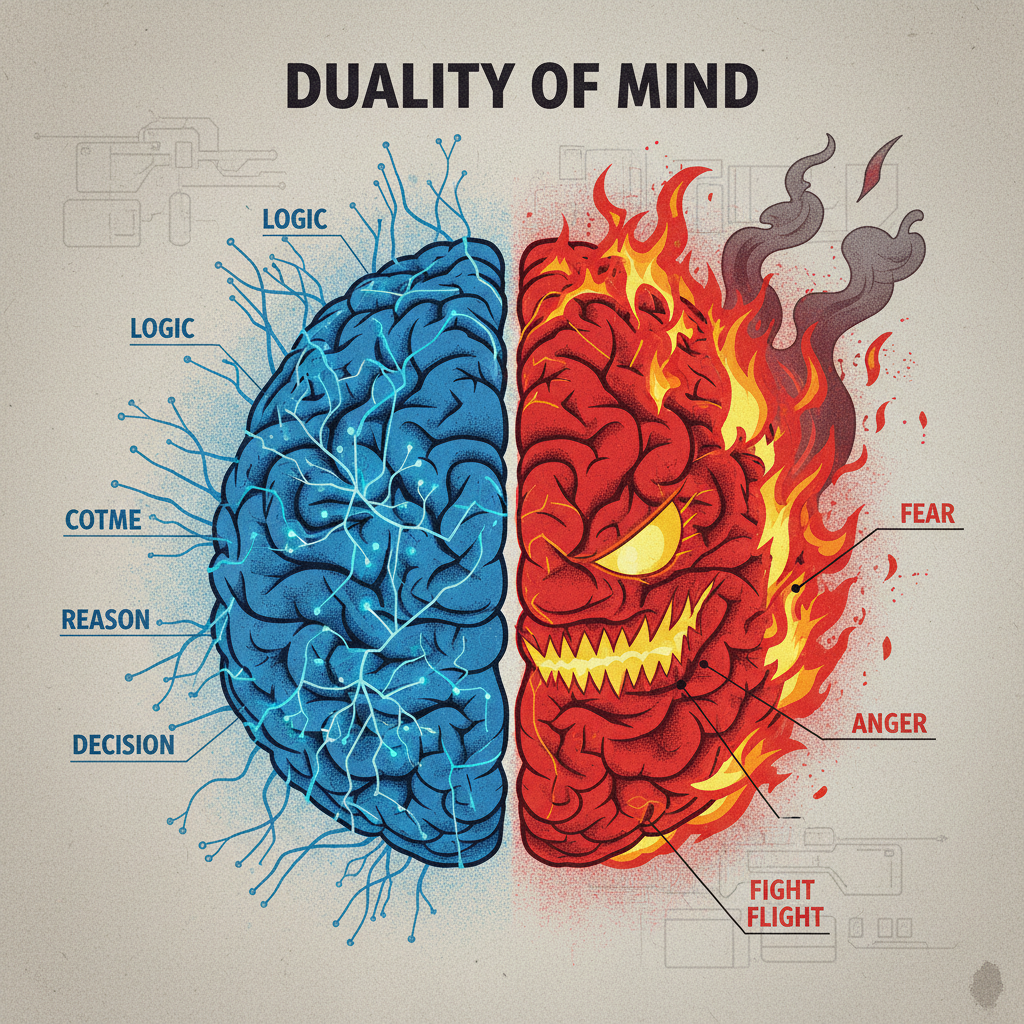
First, let’s talk about what happens in your brain when the stakes get high. Your prefrontal cortex handles rational thought. It weighs options, thinks long-term, and stays calm. But under stress, your amygdala takes over. It triggers fight-or-flight mode.

In other words, the smart part of your brain goes offline right when you need it most. Research covered by Harvard Business Review shows that stress cuts cognitive output by roughly 13%. That’s like losing a full grade level of thinking when the pressure is on.
This isn’t a weakness. It’s biology. Every leader feels it. The difference is that great leaders build systems to counter it before the crisis hits.
Decision Fatigue: Death by a Thousand Small Choices
Additionally, there’s a quieter threat most leaders ignore: decision fatigue. Research from the National Academy of Sciences found something shocking. Israeli judges granted parole 65% of the time right after taking a break. Just prior to a break? Nearly 0%.
Adults make roughly 35,000 choices per day. As a result, by the time you face that big call at 5 PM, your brain runs on fumes. The most critical choices often get your worst mental resources. That’s a design flaw in how most leaders structure their days.
For example, I now block my mornings for high-stakes choices. I push routine admin to the afternoon. This one shift changed my thinking quality more than any leadership book I’ve read. If you’re looking to bring order to chaos in your own org, start by fixing when you make your biggest calls.
Frameworks for Better Executive Decision Making Under Pressure
The OODA Loop: From Fighter Pilots to the C-Suite
Colonel John Boyd designed the OODA Loop for fighter pilots. It stands for Observe, Orient, Decide, Act. Most people focus on speed. They think the goal is to move through the loop faster. But the real power lives in the Orient phase.

Orient is where you filter what you observe through experience, mental models, and context. It’s the step that sets apart a panicked reaction from a smart response. Specifically, it’s where 20 years of networking experience and a CCIE certification pay off for me. Not because I memorize configs. Because I’ve built mental models I can lean on when things break.
Moreover, the OODA loop works just as well for business choices as for dogfights. When we face a surprise at Colossal, I run through it fast. What am I seeing? What does my experience tell me? What’s the call? Execute. Then cycle again. This kind of executive decision making under pressure becomes second nature with practice.
Two-Way Doors: Stop Treating Every Decision Like It’s Permanent
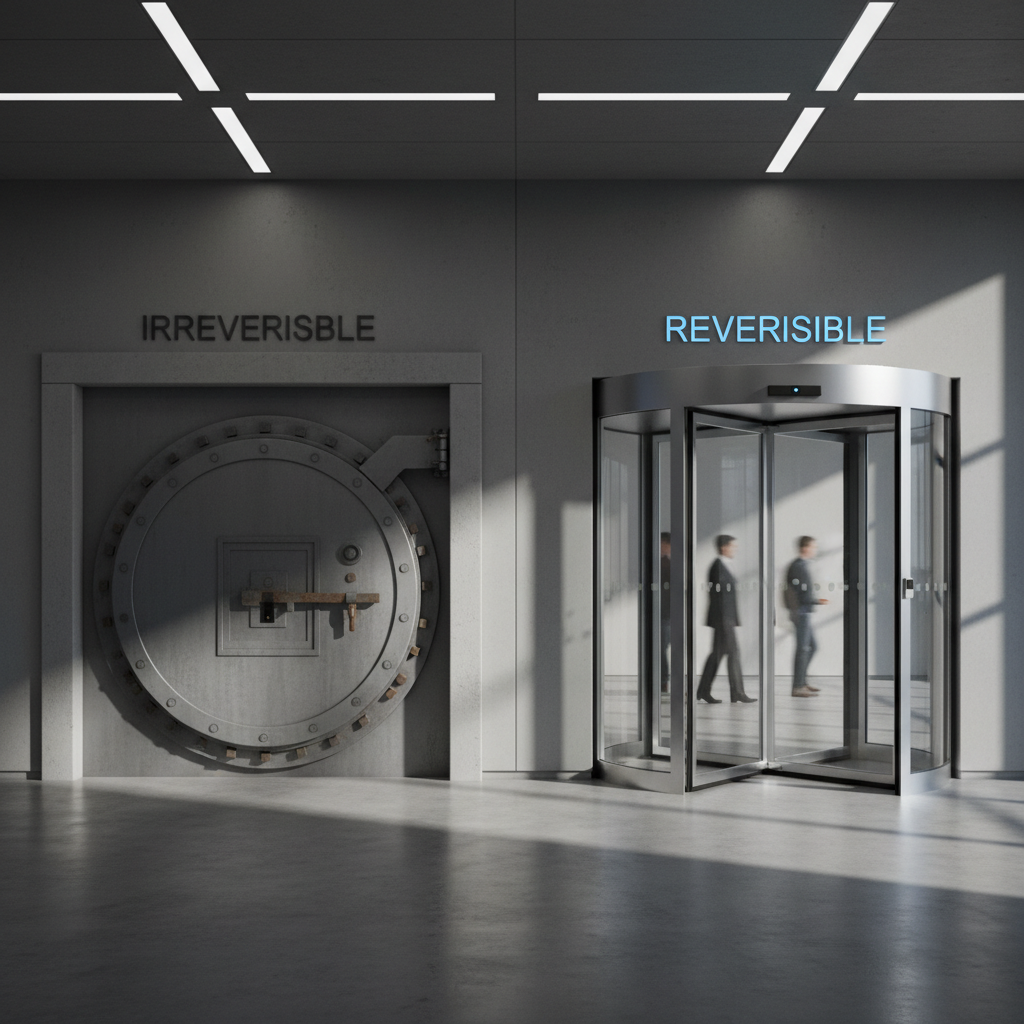
Jeff Bezos draws a line between two types of choices. Type 1 decisions are one-way doors. They’re hard to reverse. They deserve deep thought. Type 2 decisions are two-way doors. You can walk back through them if you’re wrong.
Here’s the problem. Most leaders treat nearly every choice like a Type 1. This creates bottlenecks, stress, and paralysis. In fact, a McKinsey survey found that 72% of leaders reported making a major wrong decision due to time pressure. Many of those were likely Type 2 calls that got over-analyzed.
As a result, I ask my team a simple question: “Is this a two-way door?” If it is, move fast. Make the call. Adjust later. Save your deep thinking for the one-way doors that truly matter.
Pre-Mortems: Fail Before You Fail
Psychologist Gary Klein created a method at Colossal we use all the time. It’s called the pre-mortem. Before you commit to a choice, you imagine it’s six months from now. The decision failed badly. Then you ask: “Why did it fail?”

This flips your brain into a different mode. Instead of defending your choice, you hunt for its weak spots. Klein’s research shows this method improves your ability to spot risks by 30%. Furthermore, it takes just 15 minutes.
We run pre-mortems before every major contract bid, every key hire, and every big tech investment. For instance, before we committed to a major infrastructure project last year, my team and I sat in a room for 20 minutes. We assumed the project had crashed. Then we listed every reason why. Three of those reasons became action items that saved the project. This kind of forward thinking is key to executive decision making under pressure.
Building Your Decision Architecture Before the Storm
Decision Rights and Who Makes the Call
As CTO, my most important job isn’t making every choice. It’s deciding who makes which choices. I lead a team that spans cable techs, physical security experts, and CCIEs across networking, security, collaboration, and AI. If I tried to bottleneck every call, we’d collapse.
Therefore, I use a simple principle. Push Type 2 choices down. Empower your team to act. Keep Type 1 choices at the right level. In practice, this means clearly defined thresholds for when to escalate. My engineers know exactly when to handle something themselves and when to loop me in.
Groups that use structured decision processes achieve six times better outcomes, according to research from Bain & Company. That’s not a small edge. That’s a total game-changer.
The Counsel Paradox: Who to Listen To
Here’s a trap I fell into early in my leadership journey. When faced with a hard choice, I asked too many people for input. It felt responsible. In reality, it made things worse.

Research from Wharton shows that groups under time pressure default to “shared information bias.” They discuss what everyone already knows. The unique insights get buried. As a result, more voices can actually lead to worse choices under stress.
Now, I do three things differently. First, I limit input to true domain experts. Second, I actively ask for dissent: “Tell me why this is a bad idea.” Third, I time-box the talk. We discuss for 15 minutes. Then I decide. This approach has sharpened our decision quality across the board. It’s a lesson I also shared when inspiring the team at our sales kickoff.
The Physical Edge: Why Your Body Powers Better Executive Decision Making Under Pressure
Fitness as Executive Function Training
At 39, I made a commitment. I would be in better shape at 40 than I was at 20. I lost 75 pounds. I broke my high school PRs in bench, squat, and deadlift. But the biggest change wasn’t how I looked. It was how I thought.

A 2019 meta-analysis in the British Journal of Sports Medicine found that regular exercise improves executive function by about 20%. That includes working memory, mental flexibility, and self-control. These are the exact skills you need for leadership under stress.
In addition, losing 75 pounds wasn’t one decision. It was thousands of small, steady choices under the pressure of a demanding career and a family with two young daughters. That daily discipline built a decision-making muscle that carried straight into the office. Likewise, the grit it took to show up at the gym at 5 AM trained me to show up for hard calls at work.
Sleep and Cognitive Readiness
Meanwhile, most leaders ignore the unsexy foundation: sleep. Research shows that sleeping fewer than six hours impairs your judgment the same as a 0.05% blood alcohol level. You wouldn’t walk into a board meeting after a couple of drinks. Yet many leaders do the mental equal every single day.
I protect my sleep like I protect my network uptime, sometimes to the groaning of my wife and kids. Seven hours minimum. No caffein after noon. No eating within three hours of slee. These simple habits add up to sharper thinking when it counts. If you’re curious about mindfulness and mental clarity, I’ve written about that too.
Emotional Circuit Breakers for High-Stakes Moments
Sometimes, despite all your frameworks, a moment hits you in the gut. You feel the emotional charge. You want to react right now. That’s when you need a circuit breaker.
One tool I use is the 10/10/10 rule from Suzy Welch. Before I react, I ask myself three questions. How will I feel about this choice in 10 minutes? In 10 months? In 10 years? This simple exercise pulls my brain out of fight-or-flight mode and back into rational thought.
Another method I learned from working alongside military operators is box breathing. Inhale for four seconds. Hold for four. Exhale for four. Hold for four. Neuroscience shows it takes roughly 90 seconds for the stress chemicals in your brain to clear. That tiny pause can be the gap between a reactive mistake and a clear-headed call. Of course, these tools only work if you practice them before the crisis.
Turning Every Decision Into a Training Rep
The After-Action Review
The U.S. Army’s After Action Review is one of the most powerful learning tools ever built. It asks four questions. What was supposed to happen? What actually happened? Why was there a gap? What do we do next time?
We run AARs at Colossal after every major project and every big incident. No blame. No finger-pointing. Just learning. The Army’s own data shows that units using AARs steadily improve output by 25%. We’ve seen similar gains on our team. This feedback loop sharpens executive decision making under pressure over time.
The Decision Journal
Finally, I keep a decision journal. When I make a major call, I write down the situation, my options, my reasoning, and what I chose. Months later, I review it. This practice has shown me patterns in my thinking I never would have noticed otherwise. It turns every choice into training data for the next one.
Pressure Is a Privilege
Here’s the reframe I want to leave you with. If you’re facing high-pressure choices, you’ve earned that seat. Nobody gives those calls to people who haven’t proven themselves. The pressure is proof of your progress.
Improving your executive decision making under pressure isn’t about being fearless. It’s about being prepared. It’s about building systems before the storm. Training your body and your mind. And getting just 1% better at every choice, every day.
So here’s my challenge. Pick one framework from this article and use it this week. Run a pre-mortem on your next big choice. Start a decision journal. Ask “Is this a two-way door?” before your next meeting. Try box breathing before your next tough call.
Small reps add up to big results. I’ve seen it in the gym. I’ve seen it in growing a company. And I’ve seen it in 20+ years of making hard calls in rooms where the stakes were real. The next time everything goes sideways at 11:47 PM, you’ll be ready. Not because the pressure went away. Because you trained for it.












Leave a Comment